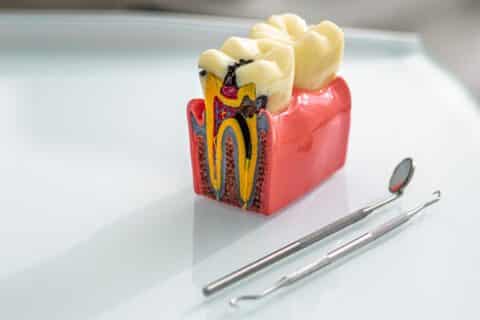
Does a Root Canal Weaken My Tooth?
The words "root canal" often make people nervous, and not just because of the procedure itself. Many patients also wonder what happens after the treatment is finished. Will the tooth become fragile? Will it crack more easily? Can it still handle everyday chewing?
These are common questions, but the answer isn't as simple as yes or no.
A root canal doesn't weaken a healthy tooth. Instead, it saves a tooth that has already been damaged by infection or deep decay. In many cases, the tooth is in far worse shape before treatment than it is afterward. The goal of root canal therapy is to remove the infection, stop the pain, and help you keep your natural tooth for as long as possible.
If you're exploring your options for root canal treatment in Round Rock, TX, understanding what really affects a tooth after treatment can help you feel more comfortable moving forward.
The Tooth Was Already in Trouble
Think of a root canal as repairing a house after a fire. The repair work isn't what caused the damage—it fixes what was already there.
The same idea applies to your tooth. By the time a root canal is needed, the pulp inside the tooth has usually become infected because of severe decay, a crack, repeated dental work, or an injury. That infection weakens the tooth long before treatment ever begins.
During the procedure, your dentist removes the infected tissue, disinfects the inside of the tooth, and seals it to prevent bacteria from returning. This allows the tooth to remain in place instead of being removed.
Why Some Teeth Feel Different After Treatment
After a root canal, the tooth no longer contains living pulp. Since the nerve has been removed, the tooth won't react to hot or cold the way it once did.
Some people mistake this change for weakness, but the two aren't the same.
What really determines the strength of the tooth is how much healthy structure remains on the outside. If most of the enamel and dentin are still intact, the tooth can continue functioning very well after treatment.
Every Root Canal Is Different
No two teeth need the exact same type of restoration.
A small infection caught early may require only a simple filling once the root canal is complete. On the other hand, a tooth with extensive decay may need additional reinforcement to withstand everyday biting forces.
Your dentist will evaluate the condition of the tooth before recommending the best way to restore it.
Why Crowns Make Such a Big Difference
Back teeth do the hardest work every time you eat. They crush and grind food hundreds of times each day.
Because of that constant pressure, many molars and premolars receive a dental crown after root canal treatment. The crown covers the remaining tooth like a protective shell, helping distribute chewing forces more evenly.
This added protection greatly lowers the chance of cracks and helps the tooth last much longer.
Your Daily Habits Matter More Than You Think
Even the strongest dental restoration needs proper care.
Brushing twice a day, cleaning between your teeth, and visiting your dentist regularly all help extend the life of a treated tooth. Avoiding habits like chewing ice, biting fingernails, or using your teeth to open packages also reduces unnecessary stress.
If you've recently searched for a dentist near me because a tooth has been hurting for days, don't wait for the discomfort to disappear on its own. Tooth infections rarely improve without treatment, and delaying care often allows the damage to spread further.
Can a Root Canal-Treated Tooth Last for Years?
Absolutely.
Many people continue using the same root canal-treated tooth for decades. In fact, it's common for these teeth to last just as long as other natural teeth when they're restored correctly and cared for consistently.
The biggest factors that influence longevity include:
- How much of the natural tooth remains.
- Whether the recommended crown or filling was completed.
- Your oral hygiene routine.
- Regular dental checkups.
- Avoiding excessive pressure from grinding or clenching.
What Happens If You Skip Treatment?
Ignoring an infected tooth rarely solves the problem.
Instead, the infection usually continues to spread, leading to increasing pain, swelling, and eventually the loss of the tooth. Once a tooth is extracted, replacing it often requires a dental implant or bridge to restore proper chewing function and prevent nearby teeth from shifting.
Whenever a tooth can be saved, preserving it is usually the most conservative and cost-effective choice.
Protecting Your Smile for the Future
A root canal isn't what weakens a tooth. The real culprit is the disease or damage that made the procedure necessary in the first place.
Once the infection has been removed and the tooth is restored with the right treatment, it can continue serving you well for many years. Following your dentist's recommendations, maintaining excellent oral hygiene, and keeping routine dental appointments all play an important role in protecting your investment.
If you're experiencing persistent tooth pain or have been told you may need root canal treatment, the team at Advanced Dental Care of Round Rock is here to help patients throughout Round Rock, TX, save their natural teeth with personalized care. Schedule an appointment today to protect your smile before the problem becomes more serious.
Frequently Asked Questions
Does removing the nerve make a tooth fragile?
Removing the nerve doesn't automatically make a tooth fragile. Most treated teeth become vulnerable because they have already lost a significant amount of healthy structure from decay or injury before the root canal.
Why do dentists often recommend crowns after root canal treatment?
A crown helps protect the remaining tooth structure from heavy chewing forces, especially on molars and premolars. It also lowers the risk of future fractures.
Can I chew normally after my root canal heals?
Yes. Once your permanent restoration has been placed and your dentist confirms the tooth has healed properly, you should be able to chew comfortably as you normally would.
How long should a root canal-treated tooth last?
With a quality restoration, healthy oral habits, and regular dental visits, many treated teeth remain functional for decades.
Is it better to save the tooth or have it removed?
Whenever possible, saving your natural tooth is usually the preferred option. Keeping your own tooth helps maintain normal chewing, jaw function, and the alignment of surrounding teeth.
What should I avoid after root canal treatment?
Until your permanent restoration is completed, avoid chewing hard foods on the treated tooth. Long term, avoid habits such as chewing ice, biting hard objects, or grinding your teeth without a nightguard.